
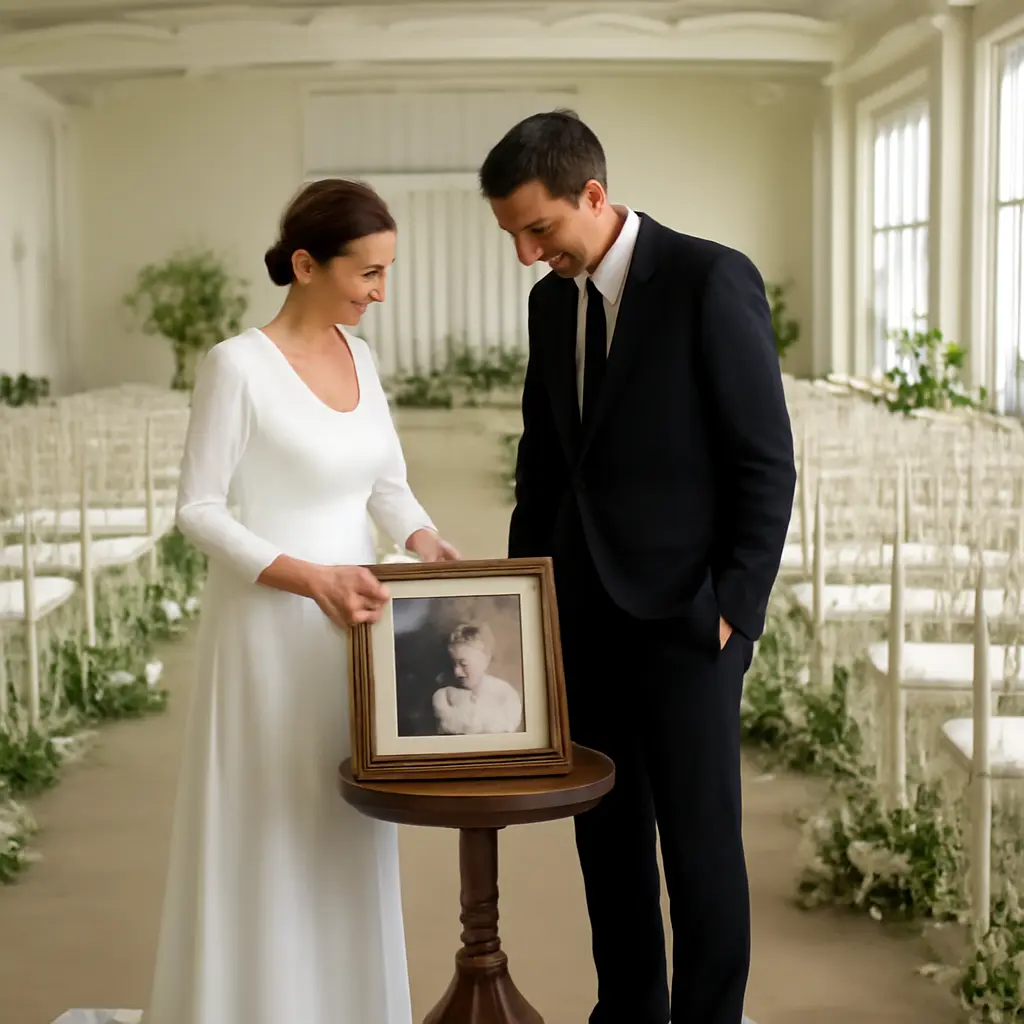
Family legacy can take a starring role at the altar when couples intentionally weave meaningful heirlooms, customs, and stories into their wedding ceremony. These personal details can make a celebration feel more connected to the people and traditions that shaped the couple, while still leaving room for their own choices. From wearing a relative’s jewelry to adapting a cultural ritual, family legacy at a wedding is not a fixed formula: it is a thoughtful selection of objects, practices, and memories. The U.S. wedding industry’s scale underscores how many couples make these choices: The Knot’s 2024 Real Weddings Study reported an average U.S. wedding cost of $33,000 in 2023, making it useful to distinguish emotionally meaningful additions from expenses couples feel pressured to make.
Wedding family legacy gives personal meaning to the altar
Wedding family legacy means the inheritance of memories, values, symbols, objects, and traditions that a couple chooses to carry into married life. The Smithsonian Center for Folklife and Cultural Heritage describes tradition as something people continually interpret and adapt, rather than simply repeat unchanged. Applied to a wedding, this means honoring family history does not require reproducing every custom exactly. Couples can preserve a ritual’s meaning while changing its form to reflect their beliefs, relationships, and practical needs.
At the altar, legacy may appear through a family heirloom, a ceremony led by a relative, a blessing, music, language, clothing, or a shared family story. These are related forms of legacy expression, not competing approaches. A useful starting point is to identify what the couple wants guests to understand: a connection to ancestry, gratitude for support, continuity between generations, or respect for a cultural tradition.
Heirlooms make family history tangible
A wedding heirloom is an object passed down, borrowed, or deliberately selected because it carries family meaning. It might be a veil, ring, handkerchief, embroidered cloth, prayer book, piece of jewelry, or a small item displayed near the ceremony space. Its importance comes less from market value than from the story attached to it.
The couple can make that story visible with a short program note or a discreet label at the ceremony. If an item is fragile, valuable, or emotionally irreplaceable, plan how it will be transported, worn, and returned. A replica or symbolic substitute can preserve the connection without putting the original at risk.
Family rituals connect generations
A family ritual is a repeated or ceremonial practice that communicates shared values and belonging. Wedding examples include a blessing from parents or elders, a candle-lighting moment, a tea ceremony, a communal prayer, or a family’s customary exchange of gifts. Practices vary widely across families and cultures, so couples should ask relatives what a ritual means rather than assume its significance.
A ritual can be adapted respectfully when its essential meaning remains clear to the people for whom it matters. For instance, a couple might invite relatives to offer brief blessings in several languages, or incorporate a familiar family song performed in a simpler arrangement. If a tradition has religious or cultural requirements, consult an appropriate family or community authority before changing it.
Thoughtful wedding legacy choices balance heritage and intention
The most meaningful legacy details are chosen, explained, and included with care. They can honor loved ones while acknowledging that families are diverse and traditions evolve. The Pew Research Center’s 2015 report on intermarriage found that 17% of U.S. newlyweds in 2015 had a spouse of a different race or ethnicity, illustrating how many couples may be navigating more than one family background. That figure describes a specific measure of intermarriage—not every form of cultural or religious difference—but it highlights why conversation and collaboration matter.
Choose traditions through conversation
Tradition selection is the process of deciding which inherited practices to include, adapt, or leave out. Couples can begin by asking relatives to share the story behind a custom, who usually participates, and what they hope it communicates. Then they can decide together whether it fits the ceremony’s values, timing, and setting.
This conversation is especially valuable when families have different customs or expectations. An inclusive ceremony does not have to give every tradition equal time; it should make intentional choices and avoid presenting one family’s practice as universal. A short explanation in the program can help guests understand a ritual without interrupting its meaning.
Use stories, music, and language to carry memory
Story-based legacy uses spoken memories, readings, music, or language to connect the wedding to family experience. A grandparent might share a brief wish, a relative might read a passage in the family’s first language, or the couple might select a song associated with a loved one. These choices can include relatives who cannot attend in person, while keeping the ceremony centered on the couple.
Keep spoken contributions concise and coordinate them with the officiant. If a reading is in a language some guests do not understand, a printed translation or a short introduction can make the moment more accessible. With music, confirm permissions and practical requirements with the venue or musicians rather than assuming every recording can be played publicly.
Honor loved ones with sensitivity
A memorial tribute is a ceremony element that acknowledges someone who has died or cannot be present. Couples might reserve a seat, carry a small memento, include a name in a reading, or observe a brief moment of remembrance. There is no single correct approach: the right choice depends on the couple’s wishes and the needs of close relatives.
Discuss the tribute in advance with anyone directly affected, particularly when grief is recent or family relationships are complicated. A quiet, optional gesture may be more comfortable than an unexpected public announcement. The aim is to make room for remembrance without making a loved one’s absence the defining feature of the celebration.
A practical plan brings family legacy into the wedding ceremony
A practical legacy plan turns intention into a ceremony detail that is respectful, safe, and manageable. The couple can first list meaningful objects, stories, and practices, then choose only those that fit their priorities. This approach helps keep family meaning at the center without turning every inherited expectation into a wedding obligation.
- Ask relatives about the origin and meaning of possible traditions or heirlooms.
- Choose a small number of details that genuinely reflect the couple’s shared values.
- Confirm religious, cultural, venue, and officiant requirements before finalizing ceremony plans.
- Decide who will handle each item or ritual, and make a backup plan for fragile objects.
- Explain unfamiliar elements in the program or through a brief introduction, where helpful.
For example, a couple with a family wedding quilt might display it near the ceremony rather than use it as a floor covering. They could invite an elder to explain its history in one sentence, then incorporate a family song during the processional. The example shows how an heirloom, a story, and music can work together without overwhelming the ceremony or requiring a costly production.
Conclusion: Family legacy belongs at the altar by choice
Wedding family legacy can take the form of heirlooms, rituals, stories, music, language, and remembrance. As the Smithsonian’s discussion of living tradition suggests, honoring heritage can involve thoughtful interpretation rather than exact repetition. Couples who ask about meaning, choose details together, and plan for accessibility and care can create a ceremony that respects their families while expressing their own commitment.
Start by asking loved ones which stories or objects they hope will be remembered, then select the details that feel authentic to the couple. The most lasting tribute is not necessarily the most elaborate one: it is the one whose meaning is understood and carried forward.
Sources: The Knot, “2024 Real Weddings Study,” https://www.theknot.com/content/real-weddings-study; Smithsonian Center for Folklife and Cultural Heritage, “What Is Folklife?,” https://folklife.si.edu/what-is-folklife; Pew Research Center, “Intermarriage in the U.S. 50 Years After Loving v. Virginia,” https://www.pewresearch.org/social-trends/2017/05/18/intermarriage-in-the-u-s-50-years-after-loving-v-virginia/


