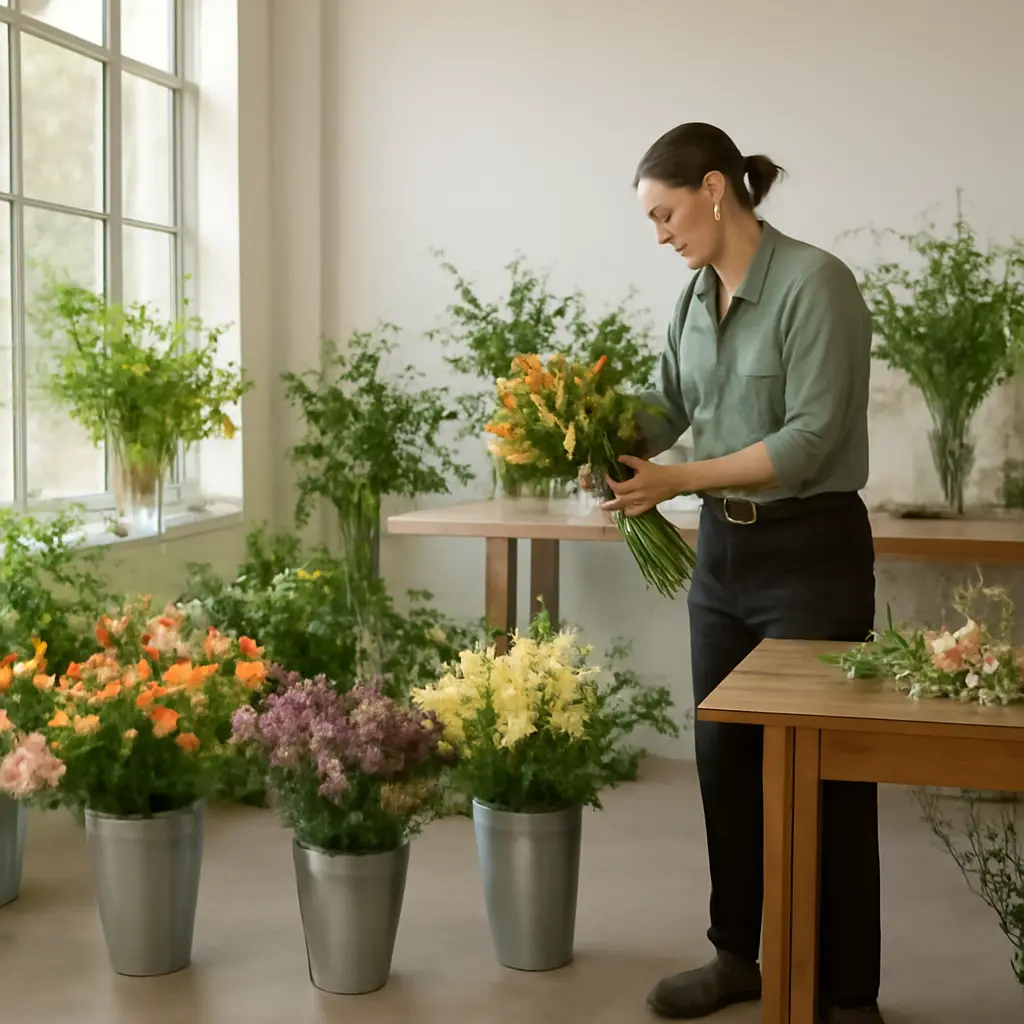
Flowers make your vision tangible by translating its mood, palette, scale, and setting into a coordinated design. The most reliable choices begin with the event’s purpose and practical constraints, then connect flower varieties, colors, shapes, and seasonal availability to the desired look. The American Society of Landscape Architects identifies factors such as color, texture, form, and scale as core components of landscape design; the same principles help organize floral arrangements. By defining the vision, selecting flowers strategically, and checking seasonality, budget, and venue conditions, you can create floral choices that feel intentional rather than merely decorative.
Flower Selection Supports Your Event Vision
Flower selection is the process of choosing and arranging blooms, foliage, and related materials to serve a specific visual and practical purpose. In event design, that purpose might be a romantic wedding, a modern product launch, a welcoming dinner, or a memorial service. Flowers influence how people read a space: color establishes mood, form directs attention, and scale determines whether arrangements feel intimate or dramatic.
A useful starting point is to write a short design brief covering the event’s mood, palette, venue, season, budget, and any must-have or unsuitable flowers. This translates a broad idea—such as “soft and garden-inspired”—into decisions a florist can act on. The University of Minnesota Extension’s guidance on cut flowers also emphasizes matching flowers to their intended use and handling them properly to support freshness. The result is a plan that balances appearance with availability and longevity.
Define the mood and visual language
Mood is the emotional character the flowers should communicate. A restrained palette and clean-lined blooms can support a contemporary look, while mixed textures and loose, varied stems can create a garden-like effect. Describe the desired feeling with a few concrete words, then share reference images and identify what you like in them—such as color, shape, or density—rather than expecting an exact copy. This distinction helps the florist adapt the idea to real flowers and the venue.
Match scale and placement to the venue
Scale is the relationship between an arrangement and its surroundings. A large installation can suit a spacious entrance, while a low centerpiece may work better where guests need to see one another across a table. Consider ceiling height, room dimensions, sightlines, lighting, and where guests will gather. A simple venue walk-through or floor plan helps identify focal points—such as an entrance, ceremony backdrop, or stage—and prevents flowers from obstructing movement or essential features.
Flower Choices Translate Color and Form Into a Cohesive Palette
A floral palette is the planned combination of flower colors, foliage tones, and supporting materials. It can be monochromatic, complementary, analogous, or deliberately high-contrast. The Royal Horticultural Society’s color-wheel guidance describes how color relationships can help gardeners combine hues; event florals use the same principle, while also accounting for venue finishes, linens, clothing, and lighting.
Color alone does not determine whether a design feels cohesive. Flower form, texture, and repetition matter too. For example, repeating one accent color in several arrangements can connect separate areas, while combining rounded blooms with spiky or airy elements introduces contrast. These related choices—palette, flower shape, and texture—work best when they reinforce the same overall direction.
Build a palette around the setting
A palette should complement the venue instead of competing with it. Begin with fixed elements such as wall color, flooring, furniture, and any prominent décor. Then choose a main color, supporting tones, and a small number of accents. Check samples under the event’s actual lighting where possible: daylight, warm indoor bulbs, and colored stage lights can change how flowers appear. If exact color matching is important, tell the florist that natural flowers vary in shade and that a precise match may not be achievable across every stem.
Balance flower shapes and textures
Form describes a bloom’s outline, while texture refers to its surface and visual detail. A composition can combine focal flowers, smaller supporting blooms, delicate filler, and foliage to create depth and movement. Repeating selected forms across a bouquet, table arrangement, and installation helps connect them, even when each piece differs in size. Ask your florist to explain which elements will provide the focal point and which will add volume or movement.
Seasonal Flower Availability Shapes Practical Choices
Seasonality describes when a flower is naturally available in a particular growing region. It can affect selection, price, freshness, and the environmental footprint associated with sourcing. The United States Department of Agriculture’s National Agricultural Statistics Service tracks U.S. floriculture production, while the USDA Agricultural Marketing Service publishes market information for specialty crops. These resources show why flower supply and pricing are not fixed: they can vary by crop, location, timing, and market conditions.
A season-first brief gives the florist room to recommend suitable alternatives. Instead of requiring one specific bloom, identify its role—such as a large focal flower, a delicate accent, or a particular color. A similar flower in season may deliver the same visual effect more reliably. This flexibility links the creative plan to sourcing realities without abandoning the desired style.
Choose locally and seasonally where suitable
Locally grown flowers are blooms sourced from nearby growers, while seasonal flowers are those available during their natural growing period in the region. These categories can overlap, but they are not identical. Ask the florist where flowers are grown, what is likely to be available on the event date, and which substitutions may be needed. Local sourcing may shorten transport, but its overall environmental benefit depends on growing methods, storage, and delivery, so avoid assuming that distance alone tells the whole story.
Plan substitutions without losing the design
A substitution plan gives the florist permission to replace unavailable stems with flowers that preserve the arrangement’s color, form, or visual role. Specify which details are essential and which can change. For instance, a particular hue may matter more than the exact flower variety, or the arrangement’s airy shape may be more important than a specific filler bloom. This approach is especially useful when weather or crop conditions affect supply close to the event.
Budget and Care Keep Floral Plans Workable
A floral budget is the amount assigned to flowers, design labor, delivery, installation, and related materials. Its best use is to prioritize the areas guests will notice most, rather than distributing funds evenly across every location. A clear brief should state the total budget, whether it includes taxes and service charges, and which elements matter most. This lets the florist suggest a suitable mix of focal installations, personal flowers, and table arrangements.
Care and venue conditions are equally practical. Heat, direct sunlight, wind, and limited water can shorten the life of cut flowers. The University of Minnesota Extension recommends clean containers, fresh water, and proper flower handling as important parts of cut-flower care. For an event, ask how arrangements will be transported, when they will be installed, and whether they need water or temperature protection before guests arrive.
Prioritize high-impact arrangements
High-impact arrangements are the pieces that anchor the guest experience or appear prominently in photographs, such as an entrance display, ceremony focal point, or head-table arrangement. Establish these priorities before adding smaller decorative details. If the budget is tight, a florist may be able to reuse arrangements in a second location, simplify low-visibility areas, or use more foliage and fewer premium focal blooms. Confirm that any reuse plan works with the schedule, transport, and installation requirements.
Account for venue conditions and flower care
Flower care means maintaining suitable water, cleanliness, temperature, and handling from delivery through the event. Some flowers tolerate heat or handling better than others, and delicate varieties may need extra protection. Share the venue’s access times, refrigeration options, outdoor exposure, and restrictions on installation materials with the florist. For outdoor events, discuss a weather contingency plan and select a setup that can be adjusted if temperatures or conditions change.
A Clear Brief Makes Floral Decisions Easier
A floral brief brings the vision and its constraints together in a format that supports collaboration. It should include the event date and location, the intended mood, palette, venue photographs or plans, preferred and unsuitable flowers, budget, key arrangement locations, and substitution preferences. The brief should also identify practical requirements, including delivery access, setup timing, and any venue rules.
- Describe the event’s purpose and the atmosphere you want guests to experience.
- Share a small set of reference images, noting the specific features you want to echo.
- Set a realistic budget and rank the arrangements by importance.
- Ask which flowers are likely to be available in the region and season.
- Agree on substitution rules, care requirements, delivery, and installation.
For example, a couple planning an outdoor summer celebration might request a relaxed, garden-inspired look in a restrained palette. By prioritizing the ceremony focal point and bouquets, allowing seasonal substitutions, and confirming shade and water arrangements, they can preserve the intended mood while adapting to supply and weather. The example illustrates a broader principle: specific priorities create more flexibility than an inflexible list of flower names.
Conclusion: Align Flowers With the Vision and the Realities
Flower choices work seamlessly with a vision when mood, palette, form, scale, seasonality, budget, and care are planned together. A clear design brief translates inspiration into practical decisions, while seasonal flexibility and thoughtful substitutions help protect the look when availability changes. Start by identifying what matters most, then consult a florist about suitable varieties, sourcing, and venue conditions. With those steps in place, flowers can strengthen the event’s atmosphere and feel naturally connected to its setting.
Sources: American Society of Landscape Architects, The Role of Landscape Architecture in Creating Healthy Communities, https://www.asla.org/; University of Minnesota Extension, Growing and Caring for Cut Flowers, https://extension.umn.edu/flowers/growing-and-caring-cut-flowers; Royal Horticultural Society, Colour Wheel, https://www.rhs.org.uk/garden-design/colour-wheel; U.S. Department of Agriculture, National Agricultural Statistics Service, Floriculture Crops, https://www.nass.usda.gov/Publications/Todays_Reports/reports/floran25.pdf; U.S. Department of Agriculture, Agricultural Marketing Service, Market News, https://www.ams.usda.gov/market-news.